
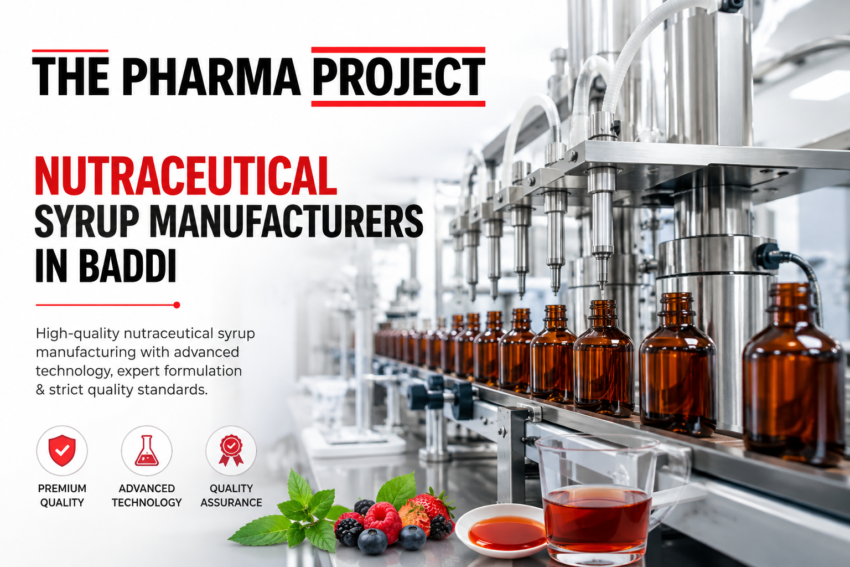
Nutraceutical Syrup Manufacturers in Baddi: A Practical 2026 Buyer’s Guide
Quick Answer: Nutraceutical syrup manufacturers in Baddi produce liquid health supplements for brand owners through third-party or private-label contracts. A sensible shortlist should be based on the manufacturer’s current FSSAI licence, permitted product category, GMP systems, testing capability, batch size, packaging options and written quotation. In 2026, buyers should compare at least three plants, request recent test documents and approve a sample before paying for commercial production.
Key Takeaways
- Compare at least 3 written quotations, not just rates shared on WhatsApp.
- A typical first order may start around 500 to 2,000 bottles per SKU, depending on formulation and packaging.
- Keep a practical buffer of 30 to 60 days for formula approval, packaging and production.
- Ask for 5 core records: licence, product permission, COA, label review and batch-testing plan.
- Release payment by milestones and keep the approved sample plus signed specification on record.
One cheap bottle can become a very expensive mistake. A leakage complaint, rejected label or inconsistent taste can damage a young supplement brand before its second batch even reaches the market. That’s the real problem buyers face. They don’t merely need a factory. They need a factory that can repeat the same formula, fill level, flavour, seal and documentation every time.
Baddi, Barotiwala and the wider Solan belt attract buyers because the region has a dense manufacturing ecosystem and road access to Chandigarh, Zirakpur, Ambala and North Indian distribution markets. But density creates noise too. Search for nutraceutical syrup manufacturers in Baddi and you’ll see manufacturers, marketers, brokers and lead-generation portals mixed together.
So how do you separate a genuine production partner from a polished sales pitch? This guide gives you a working method. You’ll learn what these manufacturers actually do, which names can enter an initial shortlist, what commercial ranges to expect, how to check documents, and which questions expose weak suppliers early.
What Exactly Do Nutraceutical Syrup Manufacturers in Baddi Do?
Nutraceutical syrup manufacturers in Baddi formulate, blend, test, fill, seal and pack liquid health supplements for their own brands or for outside brand owners.
Third-party manufacturing is an arrangement in which your brand owns the commercial product identity while an authorised facility produces it under an agreed formula and specification. Private-label manufacturing usually means selecting a ready formula, bottle and flavour, then selling it under your brand. A custom-development project goes further: the manufacturer develops or adapts the ingredient profile, sweetness, viscosity, flavour and pack.
Most projects cover raw-material sourcing, purified-water processing, mixing, filtration, in-process checks, filling, capping, labelling and secondary packing. Better plants also support pilot samples, stability planning, label review and batch documentation. Still, don’t assume every service is included. Ask whether artwork, printing cylinders, freight, testing and GST appear separately.
A nutraceutical syrup is normally regulated as a food or health supplement based on its composition and claims. It isn’t automatically an Ayurvedic medicine because it contains herbs. Check the applicable category and requirements through the Food Safety and Standards Authority of India. If you plan an Ayurvedic proprietary medicine instead, the licence route and claims differ, and the Ministry of AYUSH framework becomes relevant.
Why Does Baddi Remain a Practical Manufacturing Base in 2026?
Baddi remains useful in 2026 because buyers can compare multiple formulation, bottle, printing, testing and logistics vendors within one industrial belt.
That concentration shortens supplier discovery. You can visit a plant in Baddi, inspect a packaging vendor around Barotiwala and return through Chandigarh or Zirakpur on the same trip. It also makes alternate sourcing easier if a bottle size or carton board becomes unavailable.
India’s pharmaceutical market was estimated at about ₹5,20,000 crore in 2026, according to the IBEF pharmaceutical industry overview. That number covers pharma rather than nutraceutical syrups alone, but it shows the scale of the manufacturing and distribution environment in which Baddi operates.
From my work with pharmaceutical and nutraceutical businesses across the Zirakpur and Baddi belt, I’ve noticed one repeated pattern: new buyers ask for the lowest per-bottle rate before freezing the composition or bottle. Experienced buyers reverse that order. They approve the specification first, then compare like-for-like quotations. That simple change prevents most pricing confusion.
Baddi isn’t automatically better than Haridwar, Paonta Sahib, Ahmedabad or Sikkim for every project. Freight, minimum batch size and technical fit still decide the winner. If you’re also exploring other dosage forms, our third-party manufacturing guides offer useful comparisons.
Which Nutraceutical Syrup Manufacturers in Baddi Should Enter Your Shortlist?
Your initial shortlist can include Baddi-area companies that publicly state liquid, syrup or nutraceutical manufacturing capability, but every claim must be verified directly before an order.
| Company or option | Publicly stated relevance | What you should verify |
|---|---|---|
| Evitalife Pharma Pvt. Ltd. | Listed in Baddi nutraceutical manufacturing directories | Current plant address, liquid line, FSSAI scope and MOQ |
| Asterisk Healthcare | Promotes third-party manufacturing and syrup dosage forms | Whether the quoted unit itself makes the selected nutraceutical syrup |
| Associated Biotech | Known in Baddi contract-manufacturing listings | Relevant product permission, testing and current capacity |
| Saphnix Life Sciences | Appears in Baddi third-party manufacturing lists | Exact legal manufacturer, licence number and liquid capability |
| Phytologix Life Sciences | Markets nutraceutical manufacturing services for Baddi | Plant ownership versus marketing arrangement and approved categories |
| Directory-led alternatives | Platforms show multiple Baddi suppliers | Independent plant visit, licence check and direct agreement |
This isn’t a ranking or endorsement. A company may manufacture some products in-house and place others at an associated facility. Ask one blunt question: “Which legal entity and exact plant address will appear as manufacturer on my label?” If the answer keeps changing, stop.
Also ask whether your product will run on a dedicated food-supplement line and whether allergens, botanical extracts or sweeteners require special controls. For a wider business-model explanation, read how a PCD pharma franchise works. A franchise arrangement and a manufacturing contract aren’t the same thing.
Which Nutraceutical Syrups Can You Commonly Get Manufactured?
Baddi manufacturers commonly quote multivitamin, multimineral, iron, calcium, liver-support, antioxidant, immunity and appetite-support liquid supplements, subject to ingredient and claim compliance.
Popular projects include vitamin B-complex syrups, iron with folic acid liquids, calcium with vitamin D3 suspensions, lycopene and antioxidant combinations, L-lysine blends, herbal digestive tonics and children’s nutrition liquids. Composition matters more than the marketing name. A “women’s wellness syrup” could require very different raw materials, warnings and serving instructions from another product carrying the same front-label phrase.
Do you want a solution, suspension or thick herbal-style tonic? Each behaves differently. Minerals may settle, botanical extracts may affect colour, and some vitamins dislike heat or light. Ask for appearance, pH, viscosity, fill volume, flavour and permissible variation in the signed specification.
How Much Does Third-Party Nutraceutical Syrup Manufacturing Cost?
A practical 2026 budgeting range is roughly ₹24 to ₹118 per retail bottle before GST and freight, but composition, bottle size, active ingredients, testing and packaging can move the quote sharply.
| Cost component | Indicative planning range | Main price driver |
|---|---|---|
| 100 ml basic liquid | ₹24 to ₹46 per bottle | Formula, flavour and bottle |
| 200 ml vitamin/mineral syrup | ₹39 to ₹78 per bottle | Actives, suspension system and carton |
| 200 ml premium botanical formula | ₹58 to ₹118 per bottle | Standardised extracts and testing |
| Artwork and pre-press | ₹2,500 to ₹12,500 per SKU | Designer, label and carton complexity |
| Testing or development | ₹6,500 to ₹34,500 | Parameters, external laboratory and trials |
| Typical starting MOQ | 500 to 2,000 bottles | Batch tank, packaging print run and formula |
These are budgeting bands, not official tariffs. Get a signed quotation with composition per serving, pack size, bottle material, cap, measuring cup, label or carton, shipper quantity, taxes, freight and payment schedule. A ₹42 quote with no carton cannot be compared with a ₹49 quote that includes carton, shrink sleeve and testing.
For a 1,000-bottle launch at ₹61 each, product billing alone is ₹61,000. Add ₹8,700 for design and pre-press, ₹12,800 for testing or development, plus taxes and transport, and your cash requirement changes quickly. Keep another 8% to 12% for samples, freight variations and reprinting. And don’t print 10,000 cartons before the final label is approved.
Send us your composition, bottle size and quantity. We reply within 24 hours.
How Can You Verify a Baddi Manufacturer Before Paying?
You can verify a manufacturer by matching its legal identity, plant address, licence scope, approved category and test records with the product named in your quotation.
- Legal entity: Match the GST name, invoice name, agreement and bank beneficiary.
- FSSAI licence: Check number, validity, premises and permitted food category on the official FSSAI portal.
- Plant evidence: Visit the filling and packing area or request a live video walkthrough tied to your contact person.
- Product scope: Get written confirmation that the composition and claims can be manufactured under the quoted route.
- Quality records: Request a recent batch COA, raw-material testing approach and finished-product specifications.
- Label control: Confirm who reviews ingredients, nutrition information, warnings, serving size and marketing claims.
- Complaint process: Ask how retain samples, traceability, leakage complaints and recalls are handled.
A GMP certificate looks reassuring, but it doesn’t replace a product-specific check. WHO publishes broader health-product quality and standards guidance; your commercial decision still depends on the applicable Indian licence and the plant’s actual systems.
What Is the 7-Step Process From Enquiry to Dispatch?
The normal process moves through requirement freezing, compliance review, sampling, commercial approval, artwork, production and batch release.
- Freeze the brief. State intended users, pack size, serving size, target ingredients, flavour, bottle type, market and expected quantity.
- Review the regulatory route. Decide whether the product is a health supplement, nutraceutical, proprietary food or an AYUSH product. Don’t choose the route only because one sounds easier.
- Approve a sample. Check taste, smell, colour, sweetness, sediment, pourability and bottle compatibility. Record approval by batch or sample code.
- Compare landed cost. Put at least three quotations in one sheet and include taxes, freight, printing, testing and development.
- Finalise artwork. Match every ingredient, quantity, claim, warning, licence detail and customer-care line with the approved documents.
- Run production. Ask for the planned batch date and in-process checks. For a first order, consider a plant visit during filling or packing.
- Release and dispatch. Collect invoice, COA, batch details and transporter information. Inspect random shippers immediately after arrival.
Allow about 30 to 60 days for a fresh SKU. A ready formula with standard packaging can move faster. A custom suspension, imported active or new bottle can take longer. If a seller promises every custom project in seven days, ask what has already been pre-made.
Which Documents and Licences Will You Need?
You normally need business KYC, brand authorisation, compliant artwork and a manufacturing agreement, while the plant must hold the licence applicable to the product category.
| Document | Usually provided by | Why it matters |
|---|---|---|
| GST, PAN and firm proof | Brand owner | Contracting and invoicing identity |
| Trademark or brand authorisation | Brand owner | Right to print and sell the brand |
| Applicable manufacturing licence | Manufacturer | Authority to make the product category |
| Product specification and master formula | Both parties | Defines what must be produced |
| Approved label artwork | Both parties | Controls declarations and claims |
| COA and batch record reference | Manufacturer | Supports batch release and traceability |
| Manufacturing agreement | Both parties | Sets pricing, responsibility, rejection and confidentiality terms |
If the product crosses into a drug category, consult the relevant authority and the Central Drugs Standard Control Organisation resources. Don’t copy claims from Dabur, Himalaya, Baidyanath, Patanjali, Zandu or Charak packaging and assume they are permitted for your formula.
Which 6 Buying Mistakes Create the Most Trouble?
The costliest mistakes are comparing incomplete quotations, skipping plant verification and approving packaging before the formula and declarations are frozen.
- Buying only on rate: A ₹4 saving disappears when caps leak or cartons arrive crushed.
- Confusing marketer with manufacturer: Trading isn’t automatically bad, but you must know who owns production and quality responsibility.
- Skipping a coded sample: A loose sample bottle proves little unless it connects to an approved specification.
- Using medical claims casually: “Supports normal immunity” and “cures infection” carry very different regulatory risk.
- Ignoring repeat-batch terms: Fix tolerance for colour, flavour, viscosity, fill volume and packaging substitutions.
- Paying 100% too early: Tie payments to formula approval, artwork approval, production and dispatch wherever commercially possible.
Want a simpler route? Send a complete one-page brief when you contact suppliers. It should include composition, pack size, bottle reference, target MRP, order quantity and delivery pin code. You can also get a free manufacturing quote through The Pharma Project.
Share your formula and target quantity for a practical manufacturing discussion.
Frequently Asked Questions About Nutraceutical Syrup Manufacturers in Baddi
What is the usual MOQ for nutraceutical syrup manufacturing in Baddi?
The usual starting MOQ is around 500 to 2,000 bottles per SKU, though it depends on tank size, bottle availability, formula and printed packaging. A manufacturer may accept a smaller quantity for a ready formula with a standard bottle, while a custom product or printed carton can require a larger run.
How long does third-party syrup manufacturing take?
A new project commonly needs 30 to 60 days after requirements are clear. Ready formulas and stocked packaging can reduce the timeline. Custom flavours, stability work, imported ingredients, fresh moulds or delayed artwork approval can extend it. Ask for separate dates for sample, artwork, production and dispatch.
Do I need my own manufacturing licence?
A brand owner using third-party manufacturing generally relies on the authorised manufacturer’s applicable production licence, but the brand still needs the business registrations and food-business permissions relevant to its role. The exact requirement depends on whether you market, store, distribute or sell online, so verify your model before launch.
Can a Baddi manufacturer develop a custom syrup formula?
Yes, some Baddi manufacturers offer custom formula development, flavour trials and packaging selection. Ask who owns the final formula, whether development fees apply, what testing is included and whether the same composition will be offered to another brand. Put confidentiality and ownership terms in writing.
What should I check on an FSSAI licence?
Check the legal name, premises address, licence number, validity and authorised product or food category. The licence must relate to the actual manufacturing location shown on your label, not merely a marketing office. Save the verification record with your agreement and recheck it before repeat production.
Can I launch a syrup under my own brand name?
Yes. Third-party and private-label arrangements allow you to sell under your brand, subject to brand rights, compliant artwork and the correct manufacturer and marketer declarations. File or verify your trademark early. A company-name registration alone doesn’t necessarily protect the product brand printed on the bottle.
What tests should I request for a nutraceutical syrup?
Testing depends on the formula, but buyers commonly discuss appearance, identification or assay of relevant actives, pH, specific gravity, microbial limits and contaminant checks where applicable. Ask for the finished-product specification and COA before ordering, then confirm which tests apply to every batch.
Is Baddi cheaper than Haridwar or Ahmedabad?
Not always. Baddi can be competitive because of its dense supplier base, but the landed cost depends on formula, MOQ, packaging, taxes, freight and payment terms. Compare identical specifications from Baddi, Haridwar and Ahmedabad. The lowest ex-factory bottle price may not give the lowest delivered cost.
How do I avoid leakage and settling complaints?
Approve the bottle, cap, induction seal and liner with the actual formula, not plain water. Define acceptable sediment and shaking instructions for suspensions. Ask for transport simulation or leak checks, inspect random bottles on receipt and keep retained samples from every batch for comparison.
How Should You Choose the Right Manufacturer?
The right manufacturer is the plant that can legally make your exact formula, document it properly and repeat the approved product at a commercially workable cost.
Keep three points in front of you. Verify the plant and licence yourself. Compare complete landed quotations against one frozen specification. And approve the coded sample, artwork and testing plan before commercial production.
Baddi gives you choice, but choice alone doesn’t protect your brand. A careful first batch does. Visit the facility if possible, keep every approval in writing and don’t let a low bottle rate distract you from quality ownership. If you need help preparing a requirement sheet or comparing quotations, contact The Pharma Project with your formula, pack size and target quantity.
Read our full Disclaimer and Editorial Policy.